


 Subscribe on Youtube
 Support us on Patreon
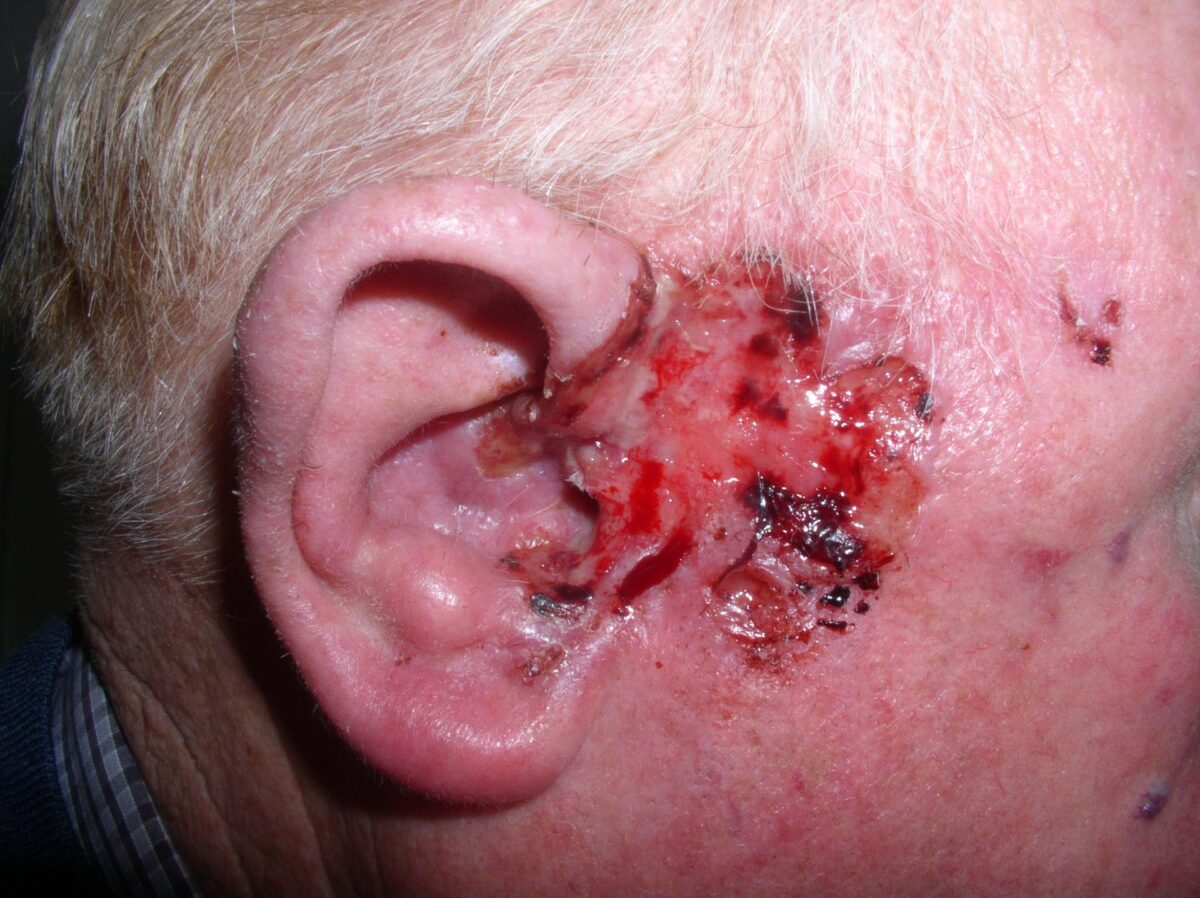
Basal-cell carcinoma (BCC), also known as basal-cell cancer, is the most common type of skin cancer. It often appears as a painless raised area of skin, which may be shiny with small blood vessels running over it. It may also present as a raised area with ulceration. Basal-cell cancer grows slowly and can damage the tissue around it, but it is unlikely to spread to distant areas or result in death.
Risk factors include exposure to ultraviolet light, having lighter skin, radiation therapy, long-term exposure to arsenic and poor immune-system function. Exposure to UV light during childhood is particularly harmful. Tanning beds have become another common source of ultraviolet radiation. Diagnosis often depends on skin examination, confirmed by tissue biopsy.
It remains unclear whether sunscreen affects the risk of basal-cell cancer. Treatment is typically by surgical removal. This can be by simple excision if the cancer is small; otherwise, Mohs surgery is generally recommended. Other options include electrodesiccation and curettage, cryosurgery, topical chemotherapy, photodynamic therapy, laser surgery or the use of imiquimod, a topical immune-activating medication. In the rare cases in which distant spread has occurred, chemotherapy or targeted therapy may be used.
Basal-cell cancer accounts for at least 32% of all cancers globally. Of skin cancers other than melanoma, about 80% are basal-cell cancers. In the United States, about 35% of white males and 25% of white females are affected by BCC at some point in their lives.
Diagnosis
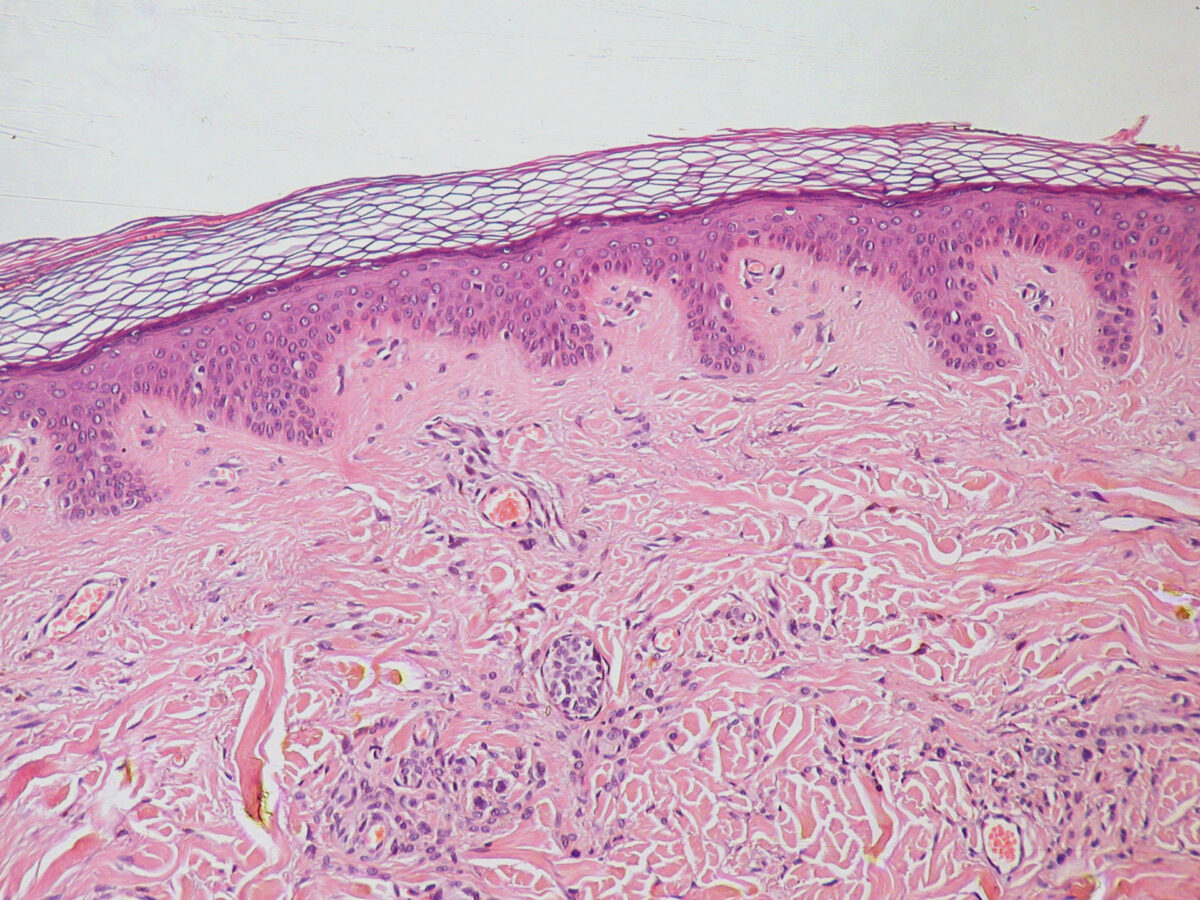
To diagnose basal-cell carcinomas, a skin biopsy is performed for histopathologic analyses. The most common method is a shave biopsy under local anesthesia. Most nodular basal-cell cancers can be diagnosed clinically; however, other variants can be very difficult to distinguish from benign lesions such as intradermal naevus, sebaceomas, fibrous papules, early acne scars, and hypertrophic scarring. Exfoliative cytology methods have high sensitivity and specificity for confirming the diagnosis of basal cell carcinoma when clinical suspicion is high but unclear usefulness otherwise.
Source: Wikipedia

Leave a Reply