


 Subscribe on Youtube
 Support us on Patreon
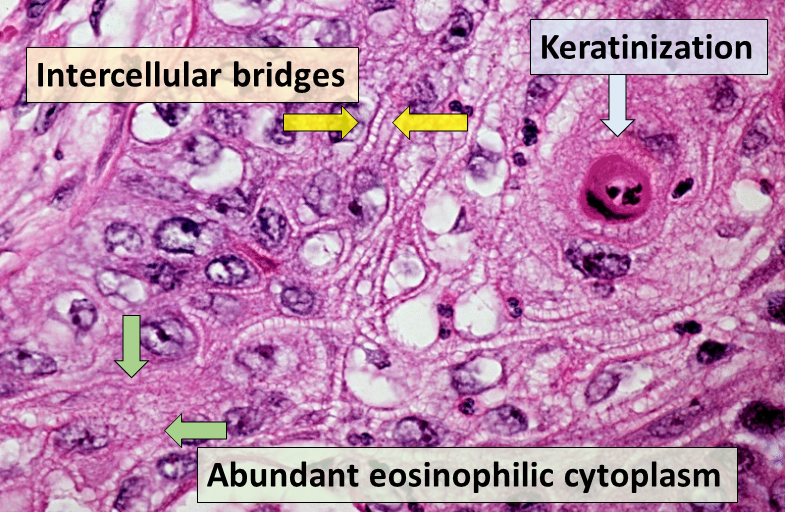
Squamous-cell carcinomas (SCCs), also known as epidermoid carcinomas, comprise a number of different types of cancer that begin in squamous cells. These cells form on the surface of the skin, on the lining of hollow organs in the body, and on the lining of the respiratory and digestive tracts.
Common types include:
- Squamous-cell skin cancer: A type of skin cancer
- Squamous-cell carcinoma of the lung: A type of lung cancer
- Squamous-cell thyroid carcinoma: A type of thyroid cancer
- Esophageal squamous-cell carcinoma: A type of esophageal cancer
- Squamous-cell carcinoma of the vagina: A type of vaginal cancer
- Despite sharing the name “squamous-cell carcinoma”, the SCCs of
- different body sites can show differences in their presented
- symptoms, natural history, prognosis, and response to treatment.
By body location
Human papillomavirus infection has been associated with SCCs of the oropharynx, lung, fingers, and anogenital region.
Head and neck cancer
About 90% of cases of head and neck cancer (cancer of the mouth, nasal cavity, nasopharynx, throat and associated structures) are due to SCC.
Skin
Squamous cell carcinoma of the skin is the second most common skin cancer, accounting for over 1 million cases in the United States each year.
Thyroid
Main article: Squamous-cell thyroid carcinoma
Primary squamous-cell thyroid carcinoma shows an aggressive biological phenotype resulting in poor prognosis for patients.
Esophagus
Esophageal cancer may be due to either esophageal squamous cell carcinoma (ESCC) or adenocarcinoma (EAC). SCCs tend to occur closer to the mouth, while adenocarcinomas occur closer to the stomach. Dysphagia (difficulty swallowing, solids worse than liquids) and painful swallowing are common initial symptoms. If the disease is localized, surgical removal of the affected esophagus may offer the possibility of a cure. If the disease has spread, chemotherapy and radiotherapy are commonly used.
Lung
Main article: Squamous cell carcinoma of the lung
Photograph of a squamous cell carcinoma: Tumour is on the left, obstructing the bronchus (lung), beyond the tumour, the bronchus is inflamed and contains mucus.
When associated with the lung, it is typically a centrally located large-cell cancer (nonsmall-cell lung cancer). It often has a paraneoplastic syndrome causing ectopic production of parathyroid hormone-related protein, resulting in hypercalcemia, but paraneoplastic syndrome is more commonly associated with small-cell lung cancer. It is primarily due to smoking.
Penis
Human papillomavirus (HPV), primarily HPV 16 and 18, are strongly implicated in the development of SCC of the penis. Three carcinomas in situ are associated with SCCs of the penis:
- Bowen’s disease presents as leukoplakia on the shaft. Around a third of cases progress to SCC.
- Erythroplasia of Queyrat, a variation of Bowen’s disease, presents as erythroplakia on the glans.
- Bowenoid papulosis, which histologically resembles Bowen disease, presents as reddish papules.
Prostate
When associated with the prostate, squamous-cell carcinoma is very aggressive in nature. It is difficult to detect as no increase in prostate-specific antigen levels is seen, meaning that the cancer is often diagnosed at an advanced stage.
Vagina and cervix
Vaginal SCC spreads slowly and usually stays near the vagina, but may spread to the lungs and liver. This is the most common type of vaginal cancer.
Bladder
Most bladder cancer is transitional cell, but bladder cancer associated with schistosomiasis is often SCC.
Source: Wikipedia


Leave a Reply